There is a strange imbalance in the modern world.
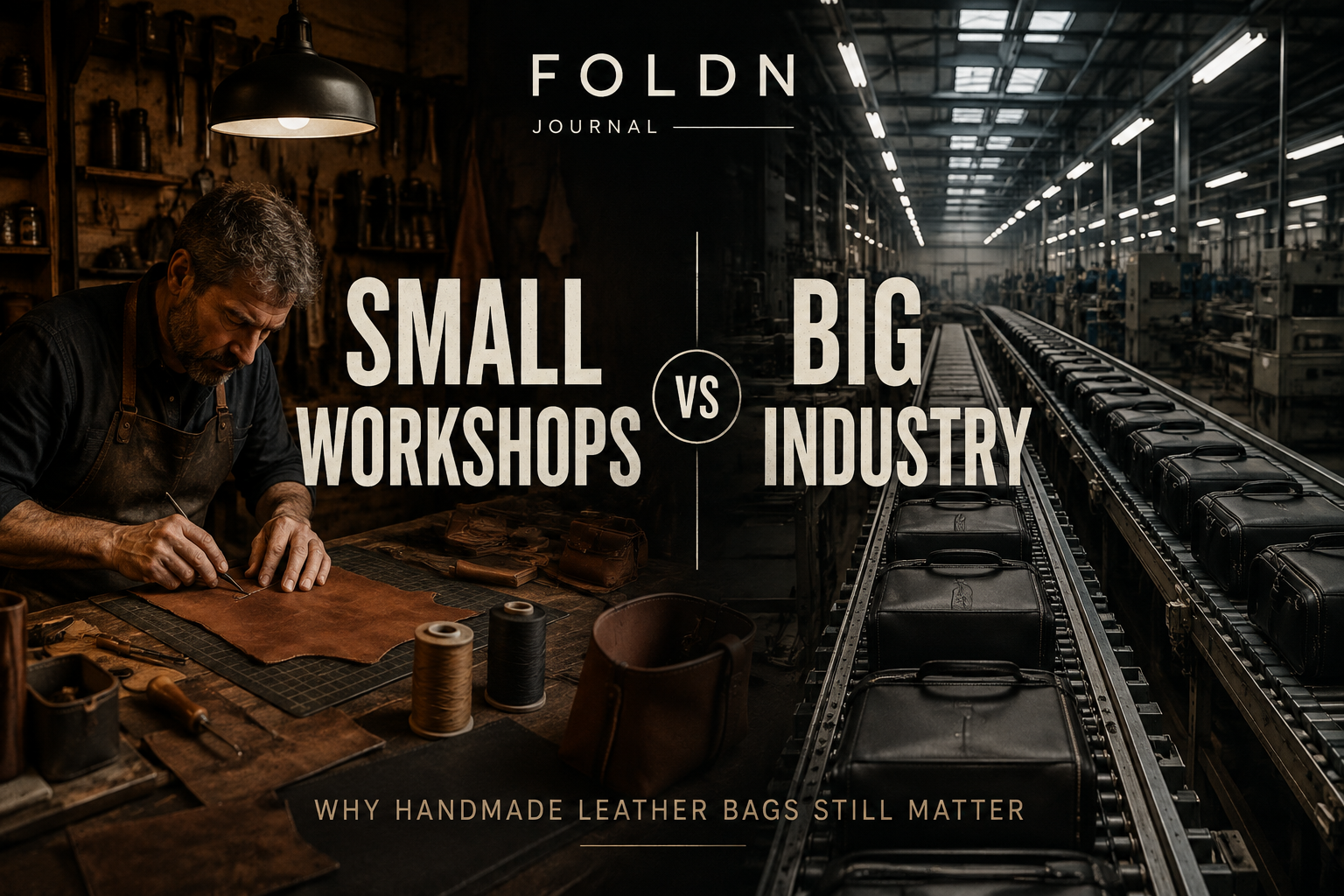
A factory can produce thousands of identical objects before a small workshop has finished making ten.
A factory can buy materials by the tonne, negotiate prices, automate production and send products across the world before a craftsman has even finished his morning coffee.
And yet, small workshops continue to exist.
Not because they can compete with industry.
They can’t.
They survive for another reason.
Some things are not made better by making more of them.
The factory makes a product. The workshop makes a relationship.
Mass production is extraordinarily good at producing consistency.
The same measurements.
The same colour.
The same stitching.
The same packaging.
If you buy one hundred identical products from a large factory, you expect all one hundred to be almost indistinguishable.
That is the point.
A small workshop works differently.
The person making the object sees the material. They notice a small difference in the leather, a change in texture, a difficult edge, a mark that cannot simply be programmed into a machine.
The object is adjusted.
Sometimes it is changed.
Sometimes the material itself decides what the final object will become.
That is something difficult to describe in a catalogue.
Handmade does not mean perfect
We have become accustomed to perfection.
Straight lines. Perfect surfaces. Identical products.
A small handmade object can contain something that a factory product often cannot: evidence of the human hand.
A tiny variation in stitching.
A slightly different edge.
A surface that changes with time.
These are not necessarily defects.
They are traces.
Someone was here.
Someone touched the material. Someone measured it, cut it, folded it, stitched it and decided when it was finished.
The object carries a little piece of that process with it.
The problem with mass production is not mass production
There is nothing inherently wrong with industry.
Without industrial production, modern life would look very different. Factories make affordable clothing, furniture, tools, electronics and countless other things that billions of people depend on.
The problem begins when everything becomes a mass-produced commodity.
When the only questions we ask are:
How cheap is it?
How fast can I get it?
How many features does it have?
How quickly can I replace it?
Something disappears from the conversation.
Do I actually want to keep this?
A small workshop cannot win the price war
A craftsman cannot realistically compete with a factory on price.
The factory buys materials in enormous quantities.
The workshop buys what it needs.
The factory has specialised machines.
The craftsman may have a workbench and a few tools.
The factory can run production around the clock.
The workshop might stop because one person needs to answer the telephone, sharpen a tool, clean the table or simply take a break.
This is why handmade products often cost more.
You are not only paying for the material.
You are paying for time.
And time is the one thing a factory is designed to save.
The value of the imperfect
There is another reason people are returning to small workshops.
We are surrounded by objects that look almost identical.
Scroll through an online marketplace and you can find thousands of products that seem to have been designed by the same machine.
They are polished.
They are efficient.
They are forgettable.
A handmade object can be different.
Not necessarily spectacular.
Sometimes it is almost painfully simple.
But it has a personality.
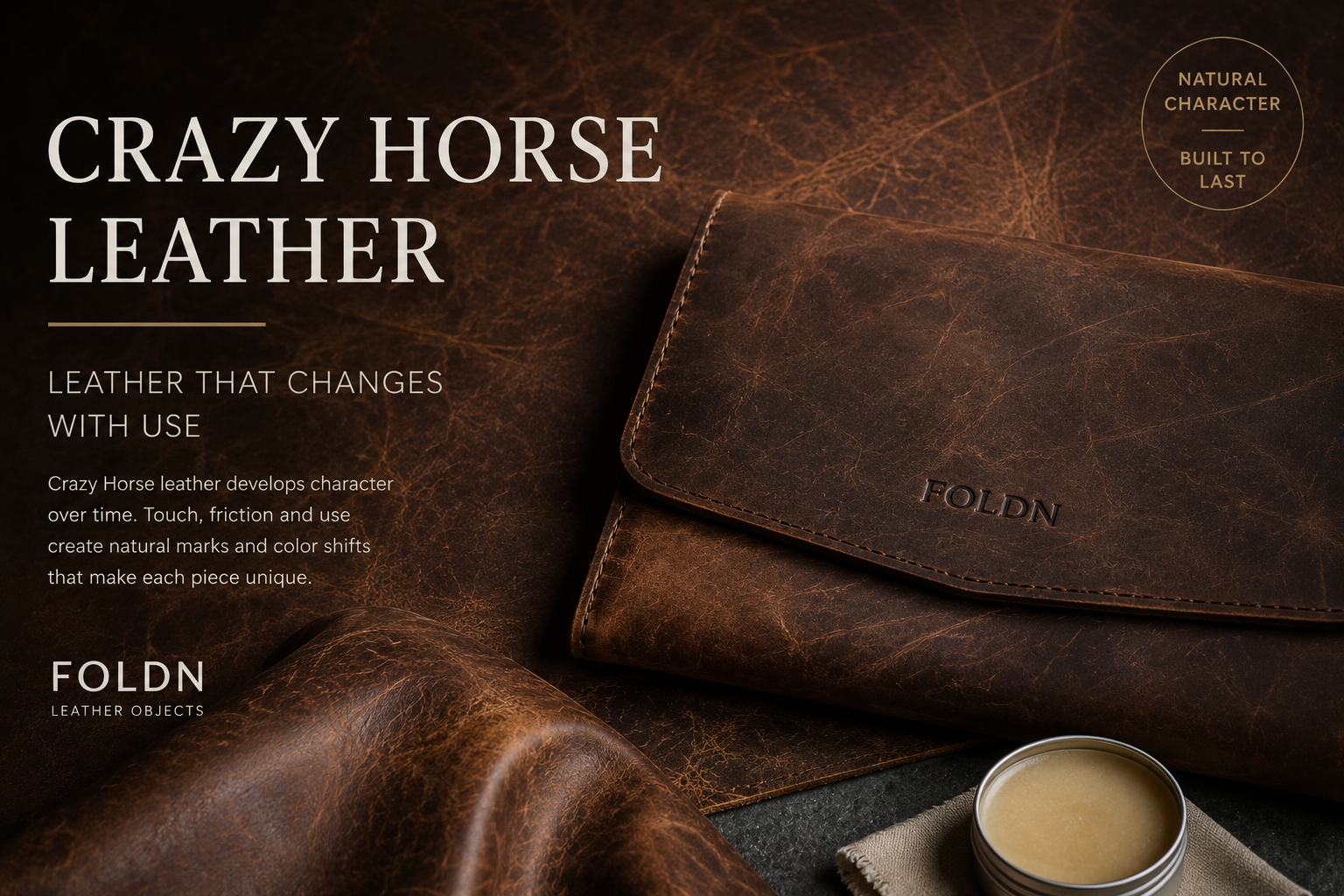
It may develop scratches. The leather may darken. The surface may become softer. The object may slowly record the life of its owner.
Instead of becoming obsolete, it becomes personal.
We don’t need more things
Perhaps this is the real question.
Do we need another object?
Or do we need a better relationship with the objects we already choose to own?
For decades, consumption has been built around replacement.
Buy something new.
Upgrade it.
Throw away the old one.
Repeat.
Small workshops operate on a different rhythm.
Make fewer things.
Make them carefully.
Let people use them.
Let them age.
Repair them if possible.
And, perhaps most importantly, give them a chance to become part of someone’s life.
The workshop is a different kind of economy
A small workshop is not simply a miniature factory.
It is a different idea of production.
The distance between the person who makes the object and the person who uses it is smaller.
Sometimes there is no distance at all.
The maker and the customer can speak directly.
The customer can ask why something was made a certain way.
The maker can explain the material.
A modification can be discussed.
A mistake can be acknowledged.
A good idea can come from either side.
That conversation is almost impossible when an object travels through a chain of factories, distributors, warehouses, advertising agencies and retailers before reaching the person who buys it.
The future may not belong to either side
It would be too romantic to suggest that small workshops will replace factories.
They won’t.
Nor should they.
The future probably needs both.
Industry can make ordinary things affordable and accessible to millions of people.
Small workshops can preserve skills, materials, ideas and forms of making that would otherwise disappear.
One produces at scale.
The other produces with intimacy.
And perhaps that is the balance we have been missing.
Making fewer things, but remembering them
A handmade object does not need to be luxurious.
It does not need a famous designer’s name.
It does not need to cost a fortune.
It only needs to be made with enough attention that someone wants to keep it.
That may be the strongest argument for small workshops.
They remind us that an object does not have to be disposable simply because something newer exists.
A factory can produce a million identical objects.
A small workshop may produce only a few.
But if one of those objects stays with someone for twenty years, acquires scratches, changes colour, travels to different places and becomes connected to memories, its value is no longer measured by the number of pieces produced.
It becomes something else.
It becomes someone’s thing.
And perhaps that is what craftsmanship has always been about.