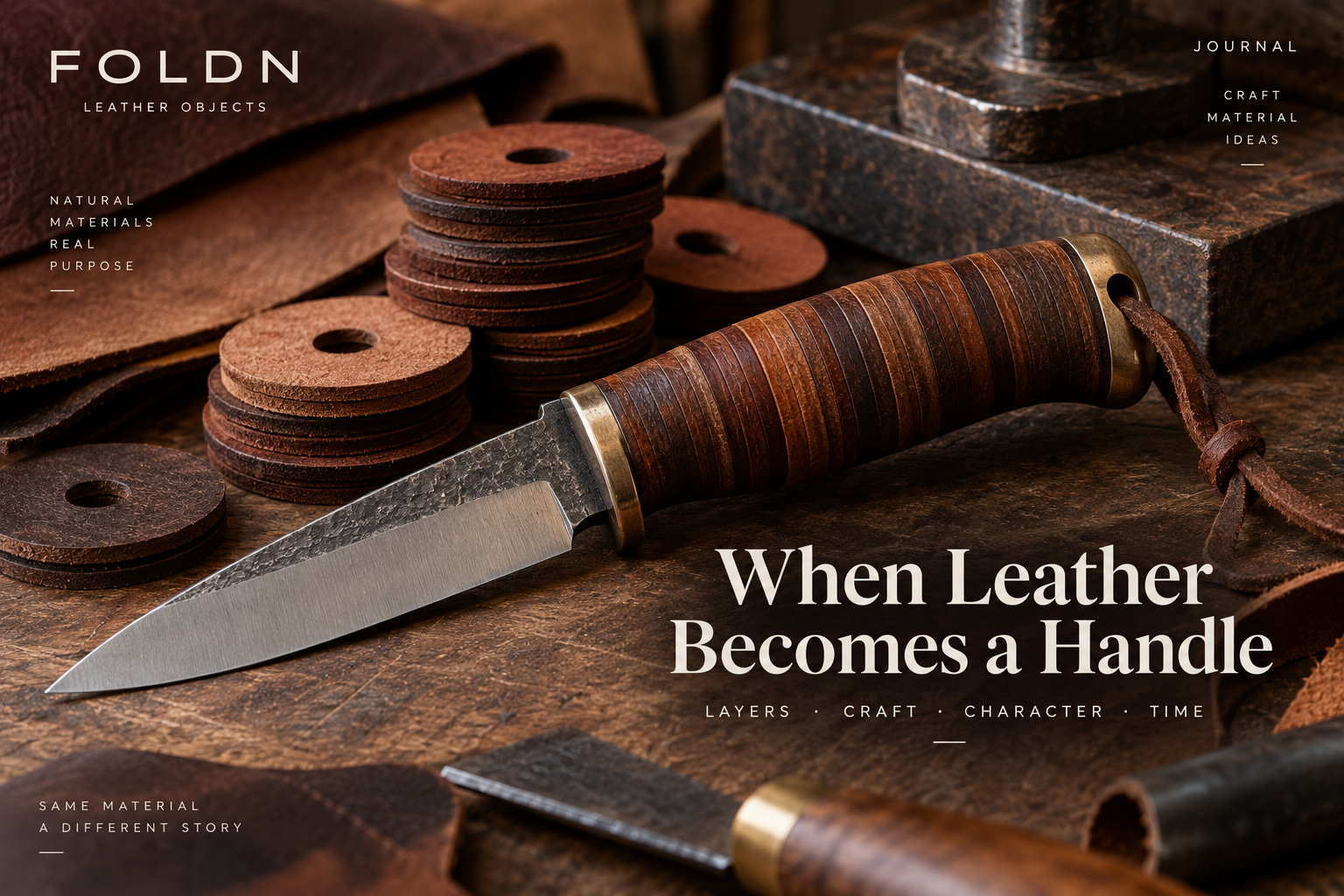
When Leather Becomes a Handle
What happens when leather stops being a covering and becomes the object itself? Discover the old craft of stacked leather handles — layer by layer, compressed, shaped and transformed by the hand.
Handmade leather pouches, bags and cases from Denmark
What happens when leather stops being a covering and becomes the object itself? Discover the old craft of stacked leather handles — layer by layer, compressed, shaped and transformed by the hand.
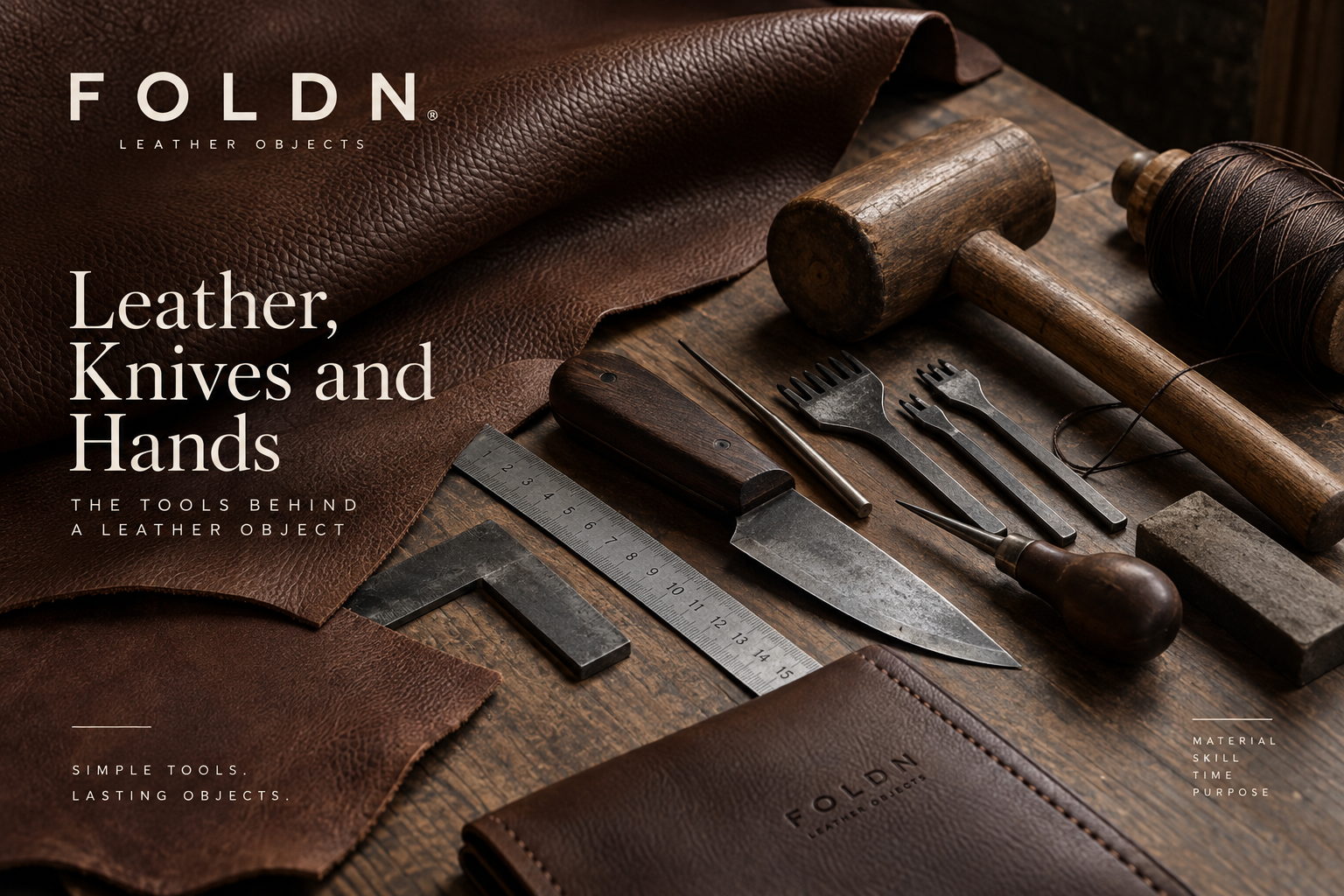
A leather workshop does not need a room full of machines. Sometimes a sharp knife, a steel ruler, an awl and a pair of hands are enough. We take a closer look at the simple tools behind handmade leather objects — and why the tool itself is never the most important part of the work.
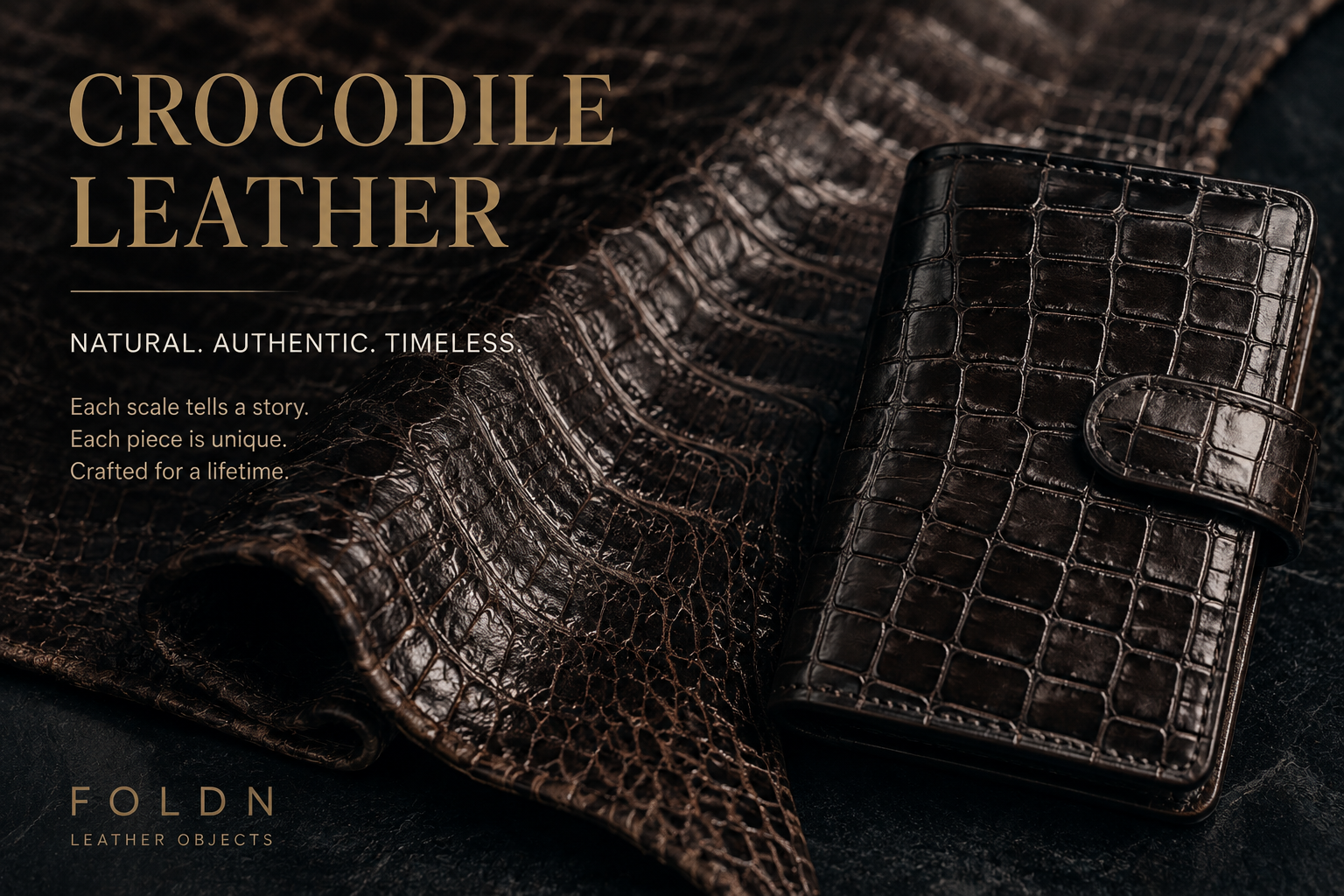
Crocodile leather is more than an exotic material. Its natural scale pattern, variation, texture and connection to time give every piece a character of its own. From wallets and watch straps to bags, cases and handmade objects, discover why genuine crocodile leather has remained one of the most distinctive materials in leathercraft.
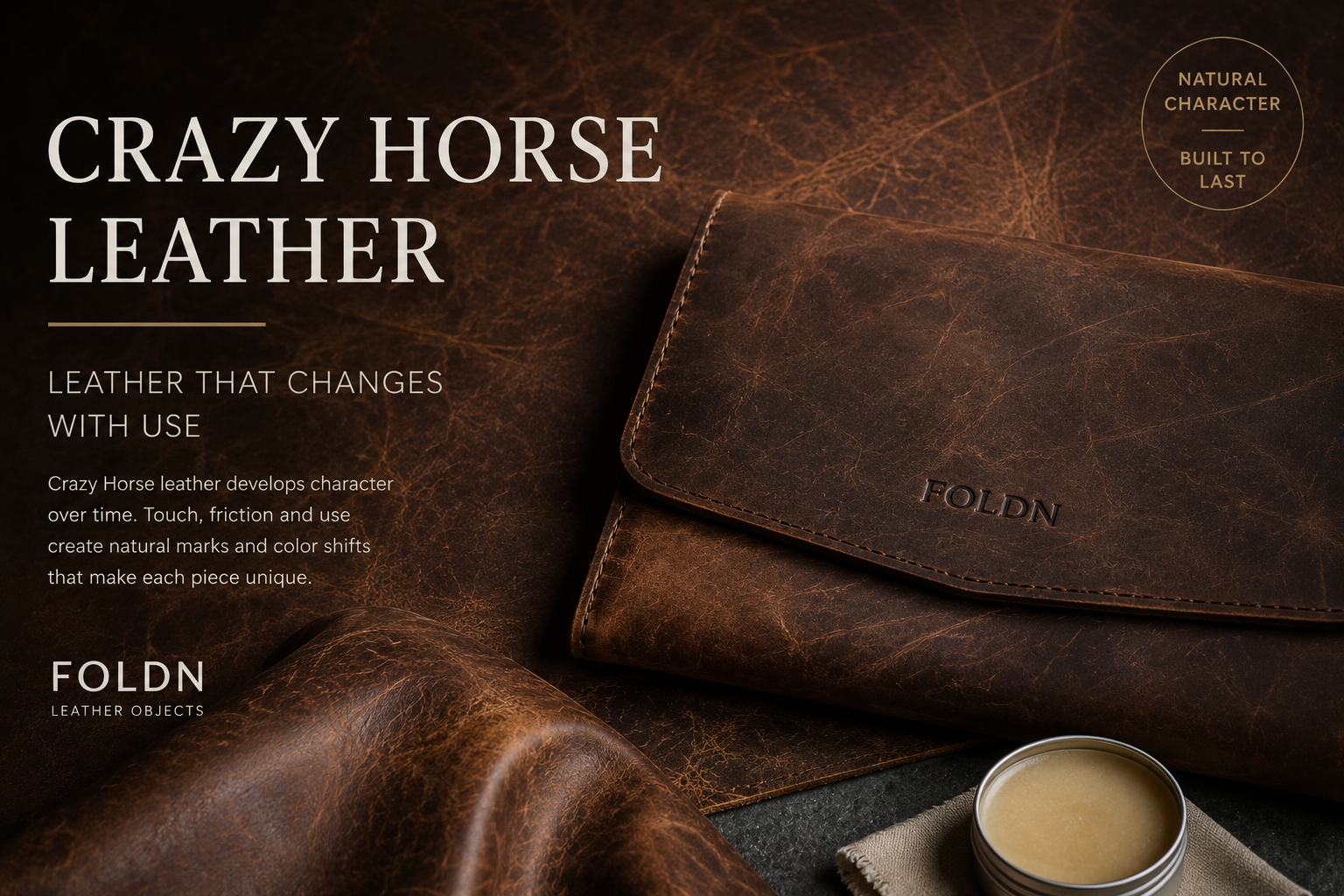
Crazy Horse leather is made to change. Touch, friction and everyday use gradually alter its colour, surface and feel, giving each FOLDN object a character that cannot be reproduced. It is not leather that tries to stay perfect — it is leather that becomes personal.
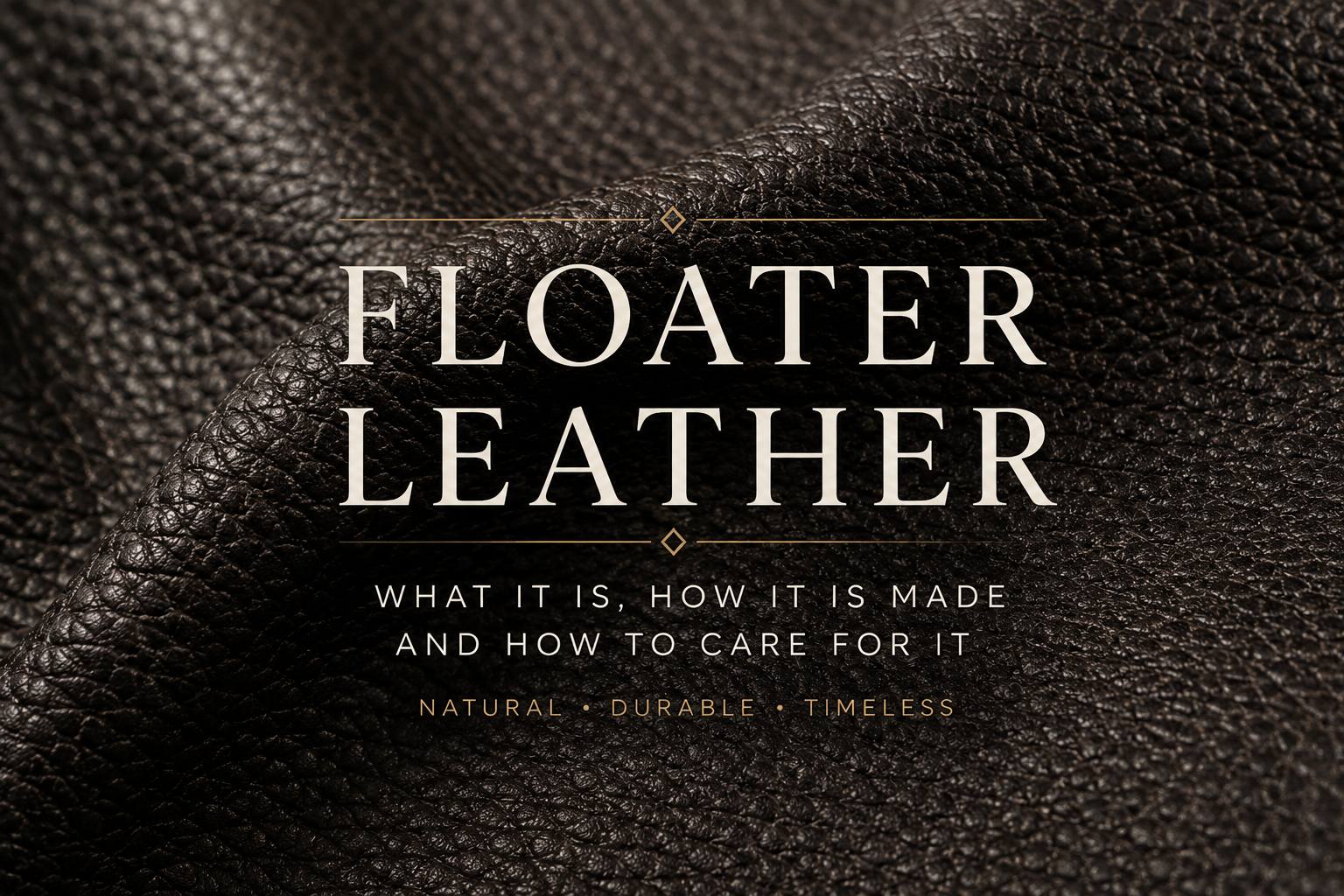
Floater leather is one of the most recognizable types of leather, known for its soft feel, natural-looking grain and practical…
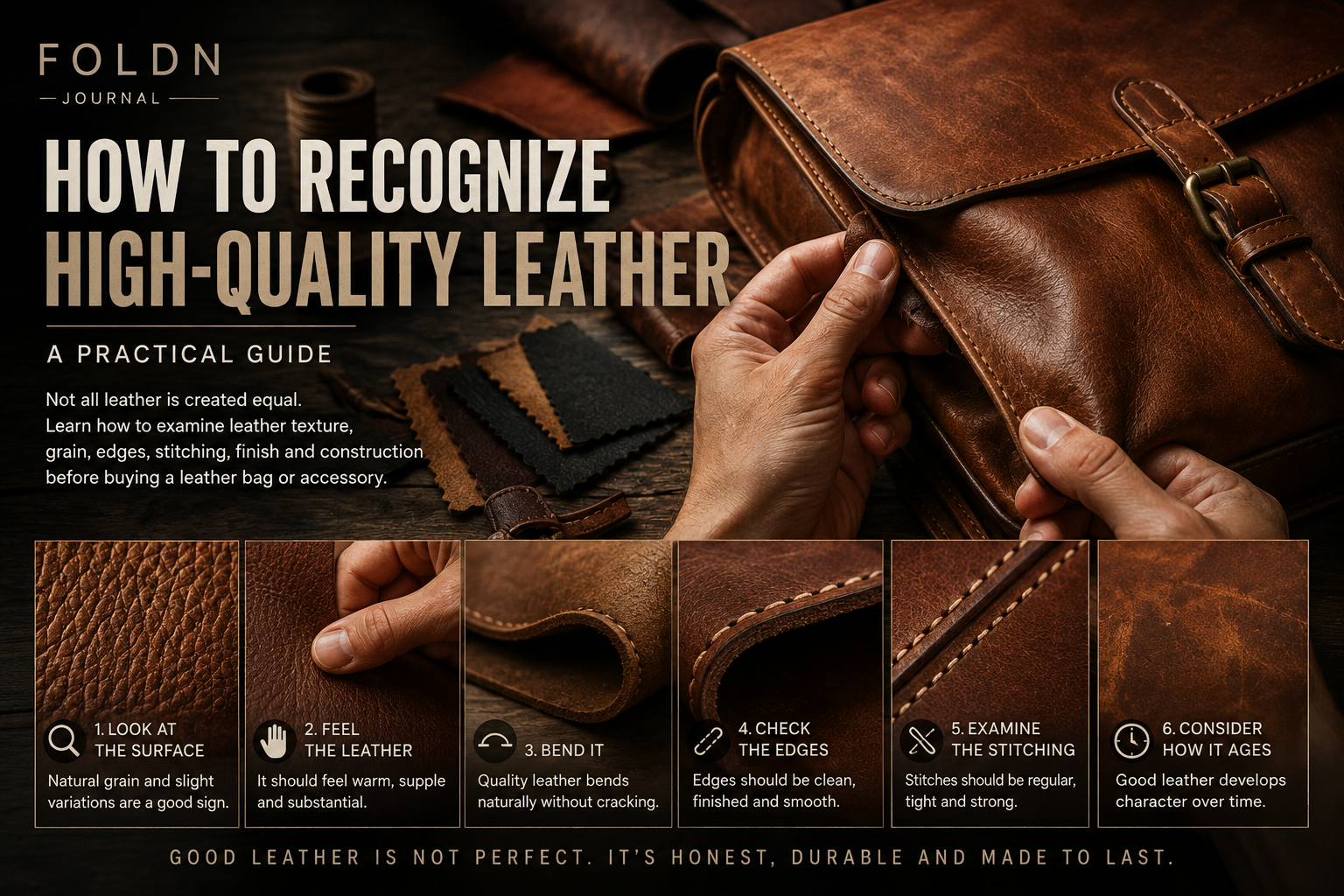
Not all leather is created equal. Learn how to recognize high-quality leather by examining its grain, feel, edges, finish, construction and how it is designed to age.
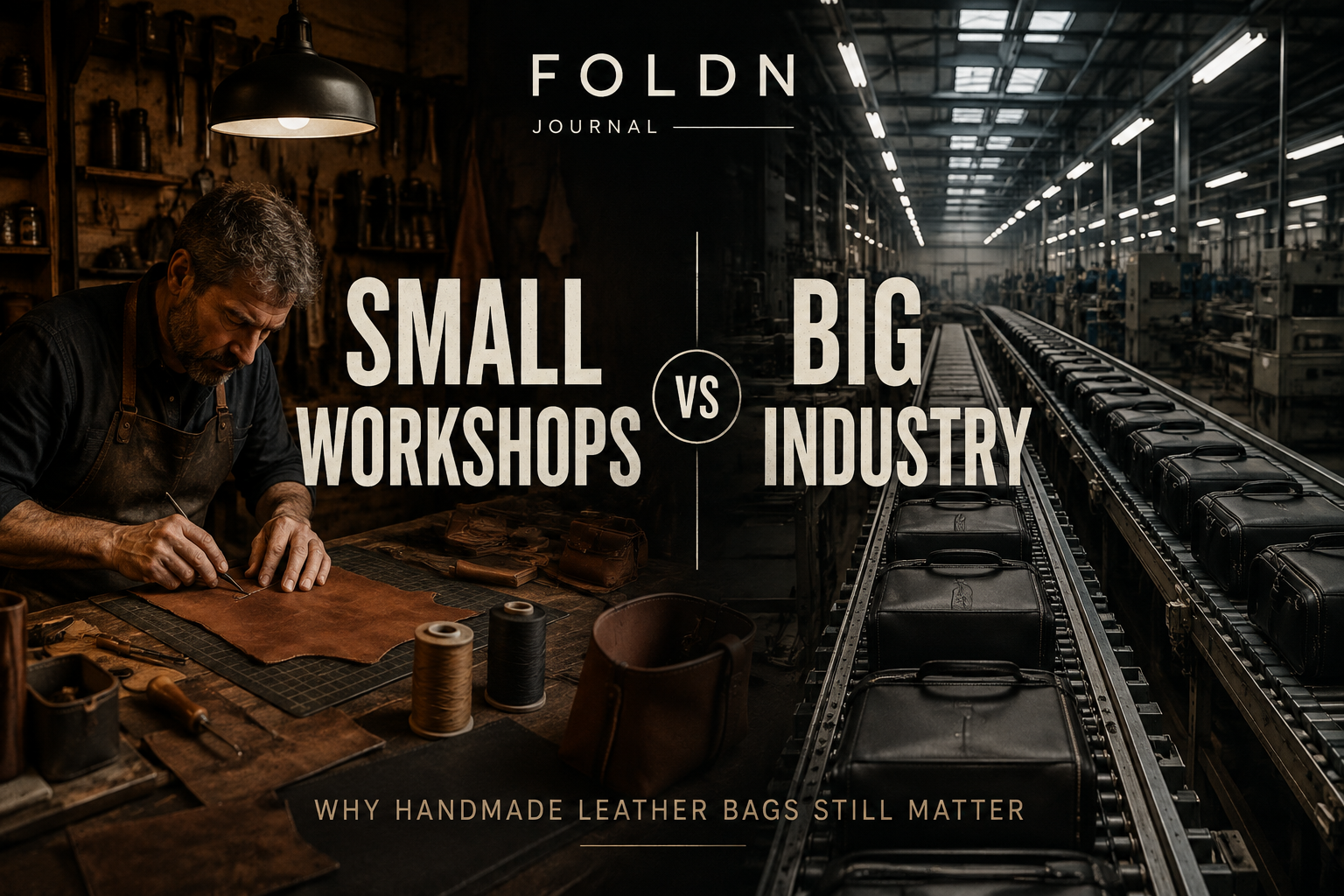
Factories are built to make more. Small workshops are built to make differently. In a world of identical objects, craftsmanship offers something increasingly rare: time, attention and character.
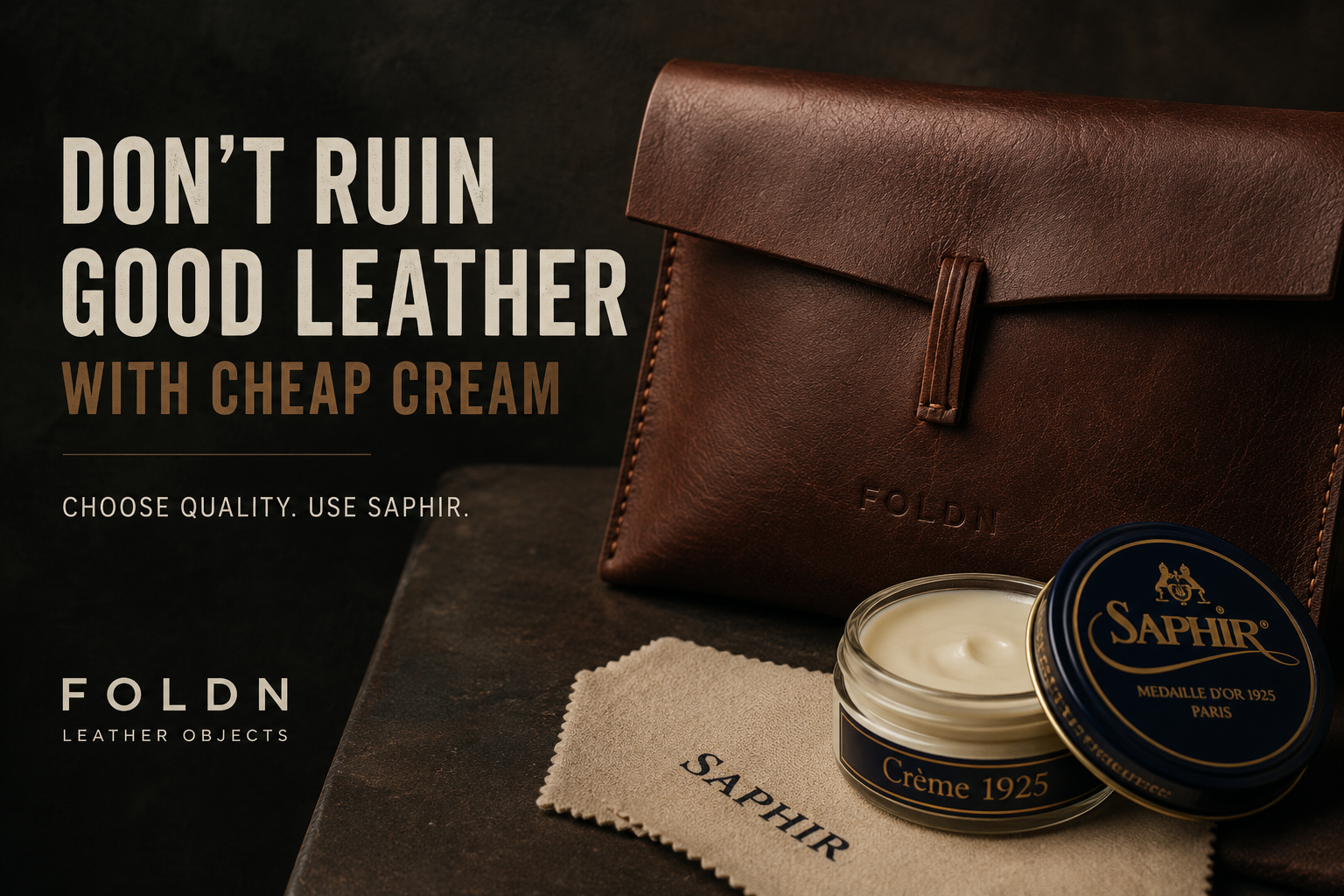
Good leather deserves better than cheap care. Learn why choosing the right leather cream matters — and why Saphir is a better choice for keeping natural leather soft, protected and beautiful for years.
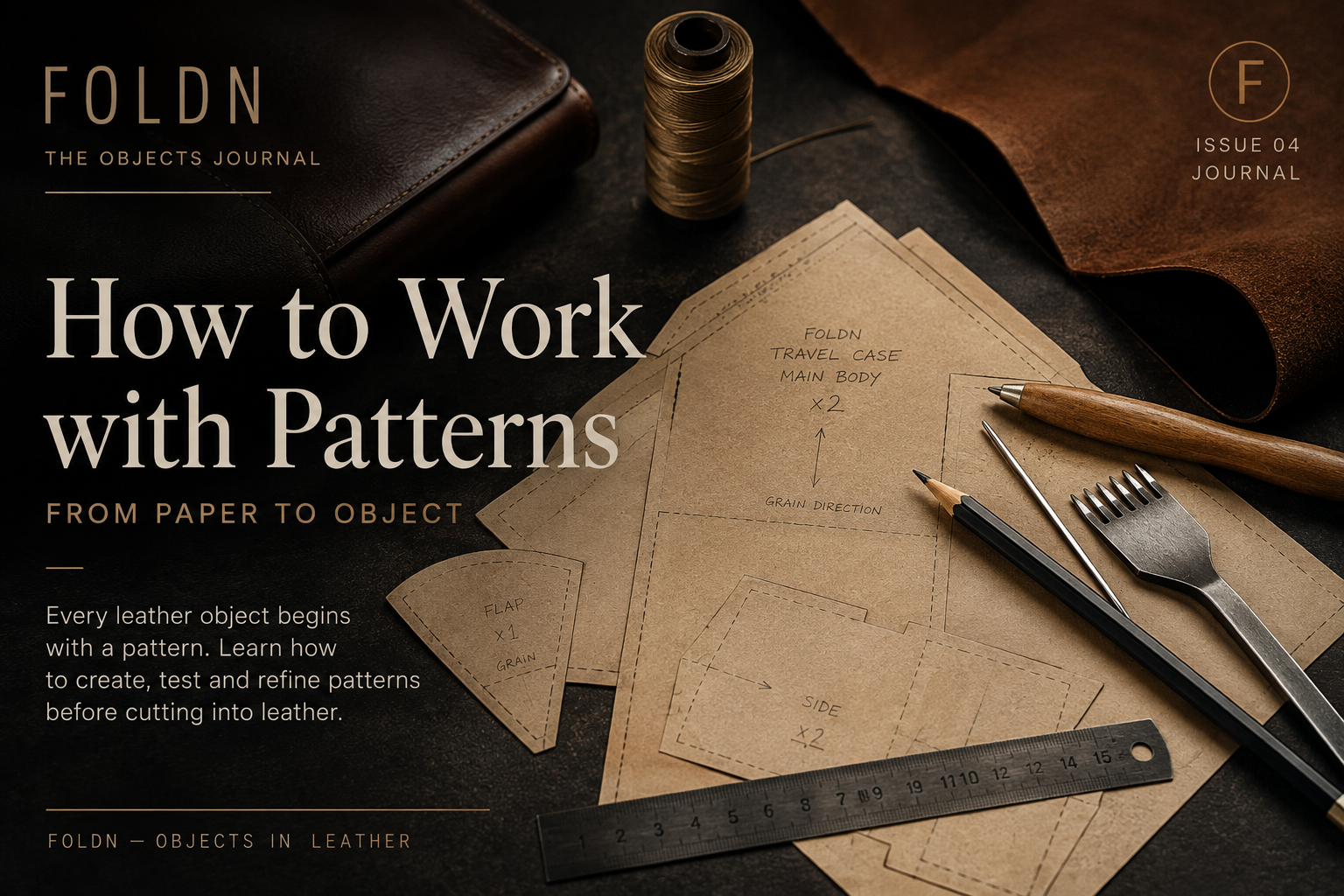
Every leather object begins with a pattern. Learn how a few lines on paper become the shape, proportions and construction of the finished piece.
Leather is more than a material. It changes with the hand, records contact and slowly becomes part of the life of the person who uses it.