There are things we keep for years without ever using them.
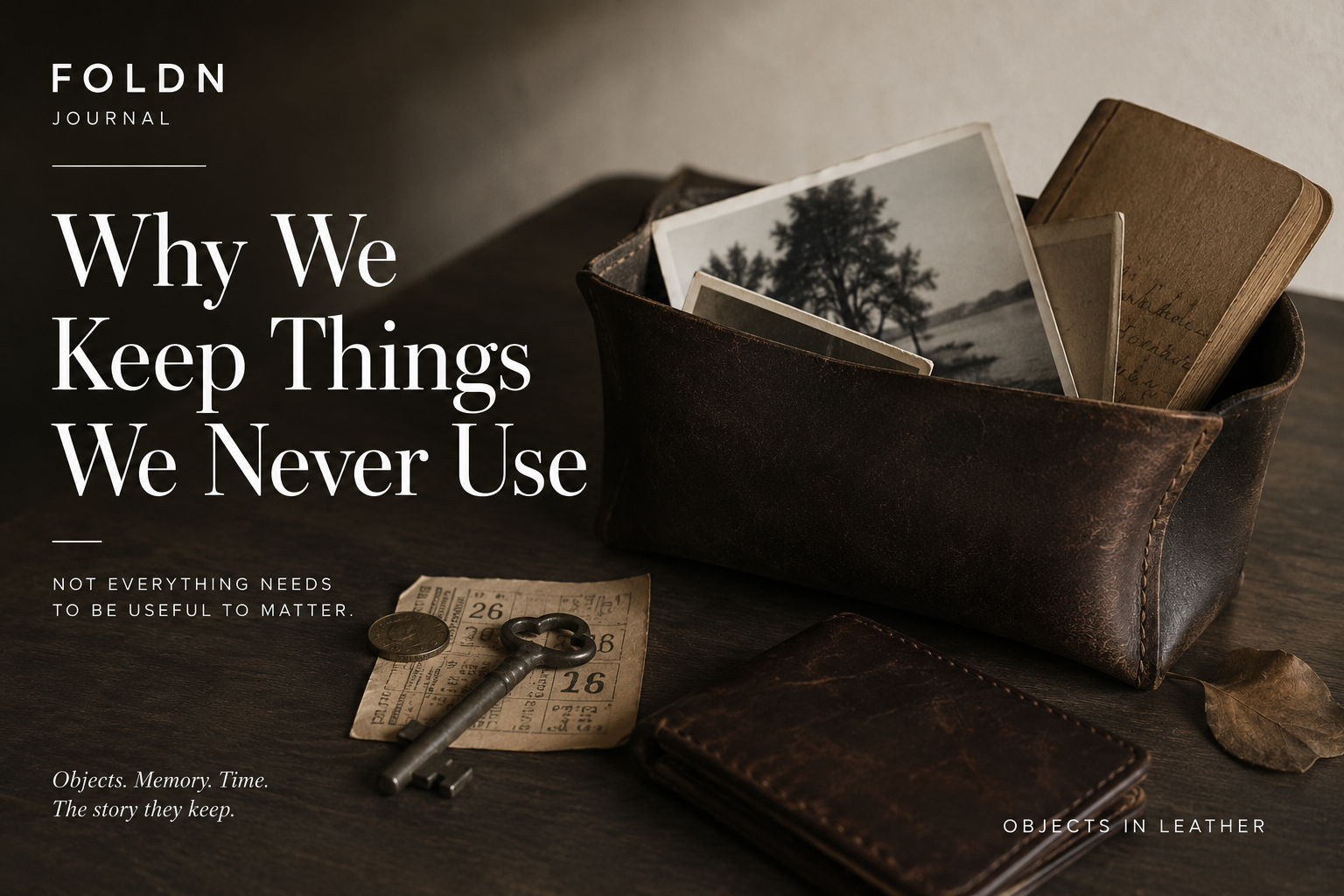
An old key. A receipt from a place we once visited. A photograph. A letter. A small object that has no practical purpose anymore.
We know we should throw it away.
But we don’t.
Perhaps because usefulness is not the only reason we keep something.
Some objects carry a memory. Others carry a person, a place, a particular period of our lives. Their value has nothing to do with their price.
This is where objects become interesting.
A thing can stop being useful and still remain important.
Leather understands this better than most materials.
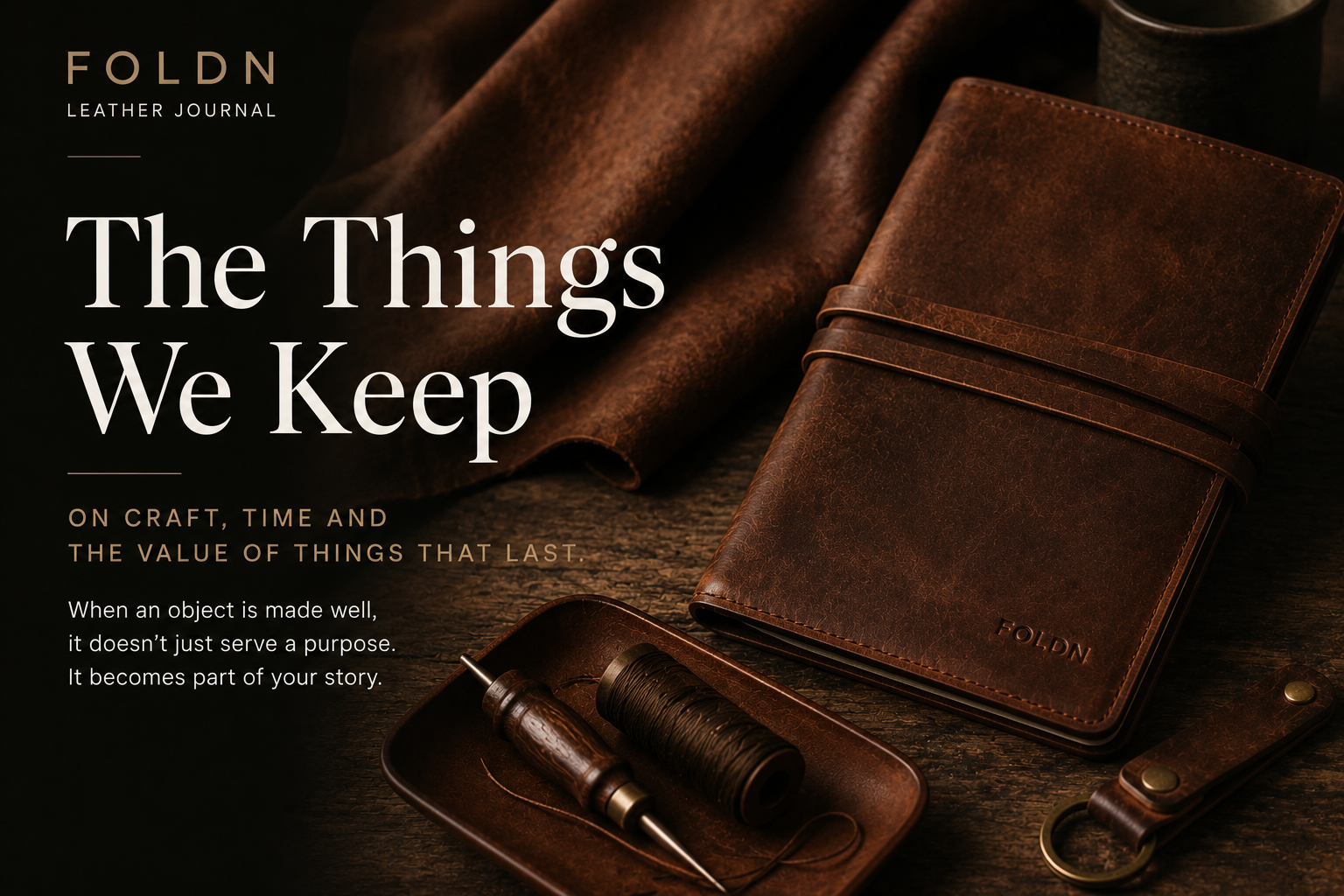
A leather wallet becomes scratched. A bag becomes softer. A pouch changes shape. The surface develops marks from hands, pockets, tables and years of everyday use.
The object becomes less perfect — and somehow more personal.
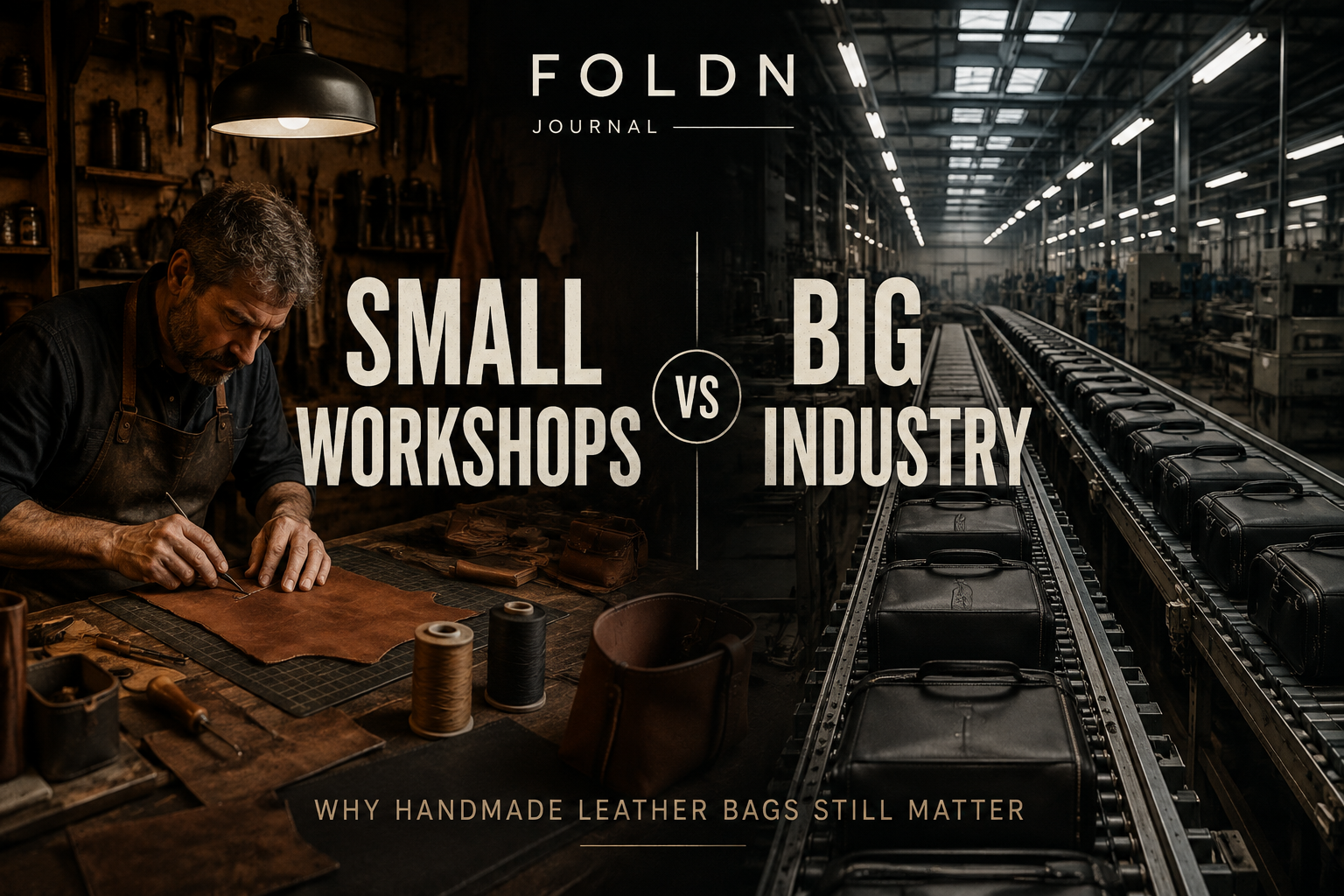
Mass-produced things are often designed to look new for as long as possible. Leather is different. Its surface records time.
A scratch does not necessarily mean damage. Sometimes it means that the object has been somewhere with you.
This may be why old leather objects are difficult to throw away.
They have a history.
We often talk about possessions in terms of function: What is it for? Do I need it? How often do I use it?
But there is another question:
What does it mean to me?
That question changes everything.
A small leather case may have once carried something important. A bag may have travelled across countries. A wallet may have been a daily companion for ten years.
Eventually, the object may become unnecessary.
But the history remains.
Perhaps we keep things we never use because throwing them away feels like throwing away a small piece of ourselves.
Not everything needs to be useful.
Some things simply need to remain.
And perhaps that is the real value of a well-made object: not how long it performs its function, but how long we want to keep it.