There is a particular moment when an object stops being new.
It happens quietly.
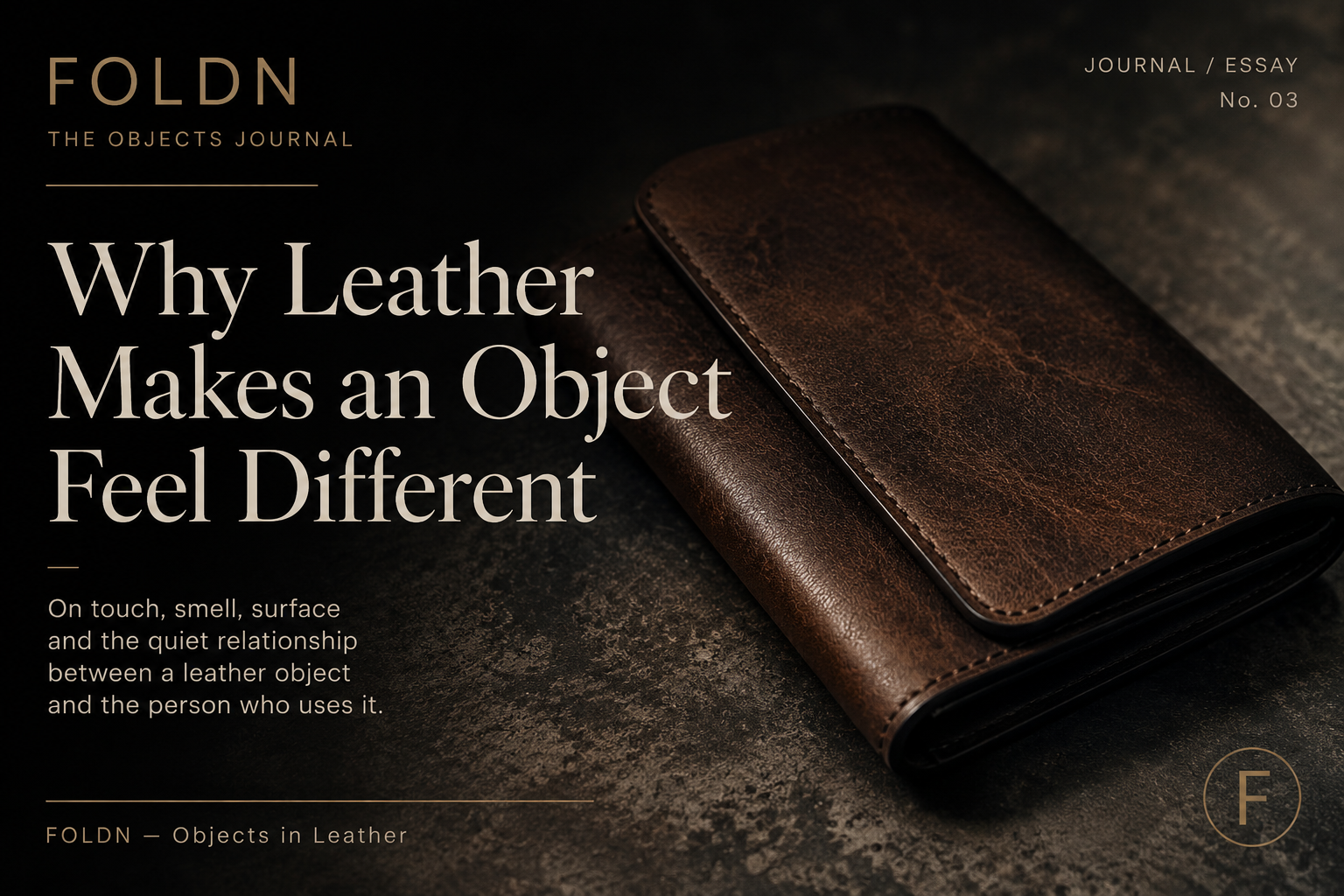
A wallet begins to soften where the hand touches it. The edges become darker. A bag develops small marks from journeys that nobody else remembers. A leather case becomes slightly worn, slightly imperfect — and somehow more beautiful than it was on the first day.
This is the moment when an object begins to belong to us.
We live in a world that constantly tells us to replace things. A newer phone. A newer jacket. A newer bag. A newer version of almost everything.
But some objects are made for another kind of relationship.
They are made to stay.
Leather remembers
Leather is one of the few materials that openly accepts time.
It does not try to hide its age. It records it.
Every scratch tells a small story. Every change in colour is part of its journey. The surface becomes softer, deeper and more individual with use.
Two identical leather objects can leave the workshop together and return years later looking completely different.
That is not a failure of the material.
That is its character.
A manufactured surface tries to remain unchanged. Natural leather becomes something else through use.
It grows old with you.
The value of a thing
Perhaps we have forgotten what it means to own something.
Not simply to possess it, but to live with it.
A well-made object can become part of everyday life so naturally that we stop noticing it. It sits on the desk. It travels with us. We put our keys inside it, our documents, our tools, our small private things.
And then, one day, we realise that we have had it for ten years.
There is a strange kind of luxury in that.
Not the luxury of a famous logo.
The luxury of not needing to buy another one.
Made slowly
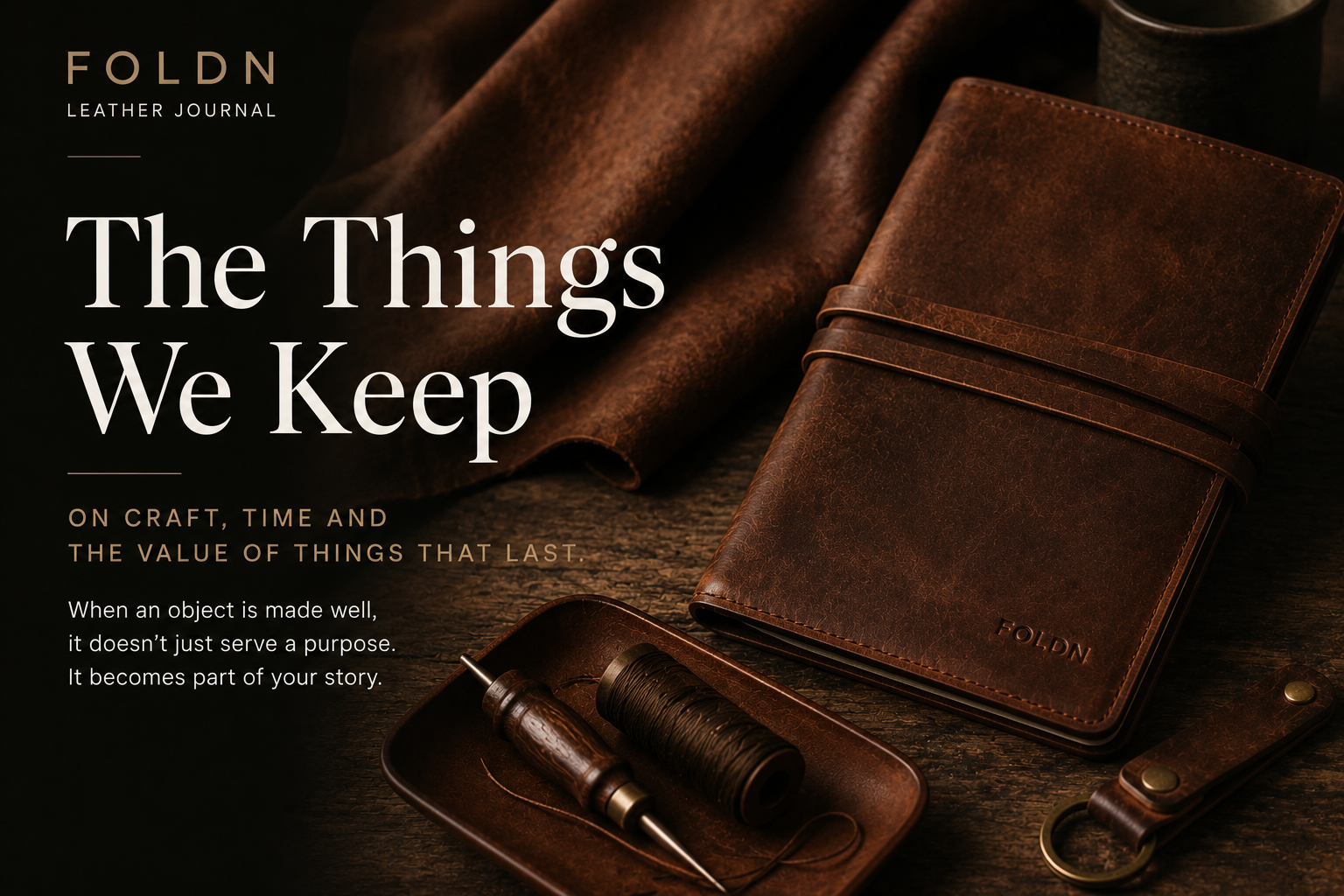
A handmade leather object carries another kind of time inside it.
The time of choosing the leather.
The time of cutting.
The time of measuring.
The time of making a clean fold, punching a hole, pulling a thread through the material and finishing an edge.
None of these things happen instantly.
And perhaps they shouldn’t.
When everything around us is becoming faster, making something slowly becomes almost an act of resistance.
It says that the object is worth the time.
Not perfect. Real.
We often associate perfection with newness.
Perfect colour. Perfect surface. Perfect edges. No scratches.
But perfection is a poor description of a life well lived.
A leather object with a few marks is not damaged in the same way an object made from a disposable material might be.
It has evidence.
It has memory.
It has been somewhere.
That is why an old leather bag can sometimes be more beautiful than an expensive new one.
It has already lived.
The workshop
At FOLDN, we are interested in this relationship between material, object and time.
Not in making hundreds of things.
Not in following every trend.
But in making objects that can remain useful after the trend has disappeared.
A good object should not demand attention every morning.
It should simply be there.
Quietly useful.
Quietly becoming yours.
Because perhaps the real purpose of craftsmanship is not to make something beautiful for today.
It is to make something that will still matter tomorrow.
And ten years after tomorrow.
And maybe, one day, to become one of those strange old things that someone finds in a drawer and refuses to throw away.
Not because it is expensive.
Not because it carries a famous name.
But because it carries a piece of someone’s life.
That is the kind of thing worth making.