There are things we carry every day without thinking about them.
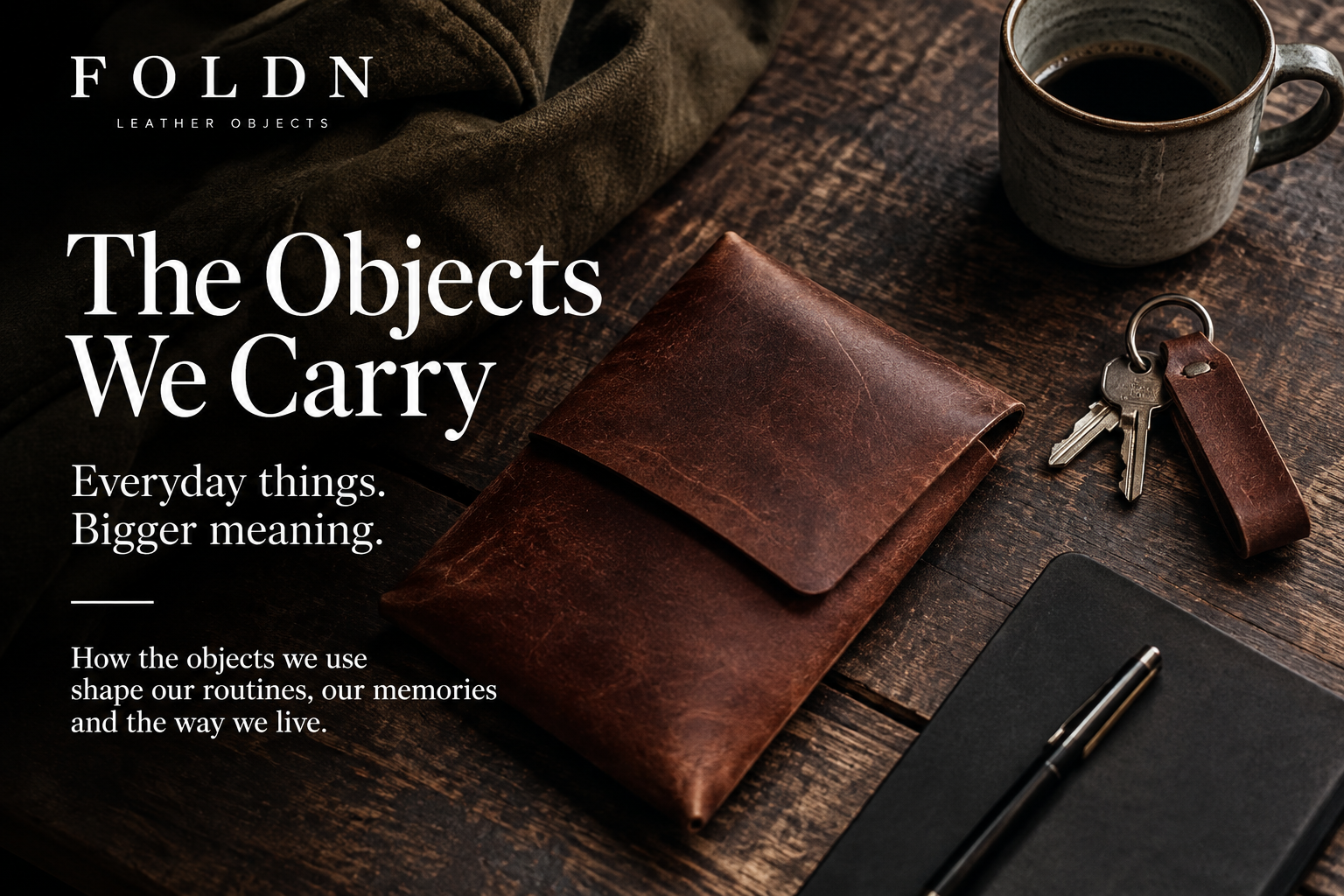
A wallet. Keys. A notebook. A small case. A pair of glasses. A phone. Sometimes a photograph, a receipt, a coin that has been sitting in a pocket for years.
Most of these things are ordinary. But ordinary does not mean meaningless.
The objects that stay with us become part of our routines. We touch them when we leave the house. We put them on the table when we arrive. We take them with us when we travel. Over time, they collect scratches, stains, marks and memories.
This is where an object becomes something more than a product.
We live with our things
Modern production has made almost everything replaceable.
Something breaks, we throw it away. Something looks old, we buy a new one. Something is slightly inconvenient, we replace it with something supposedly better.
The result is a strange relationship with the things around us.
We own more, but often care about less.
An older object can offer something different. It doesn’t have to be perfect. In fact, its imperfections are often what make it interesting.
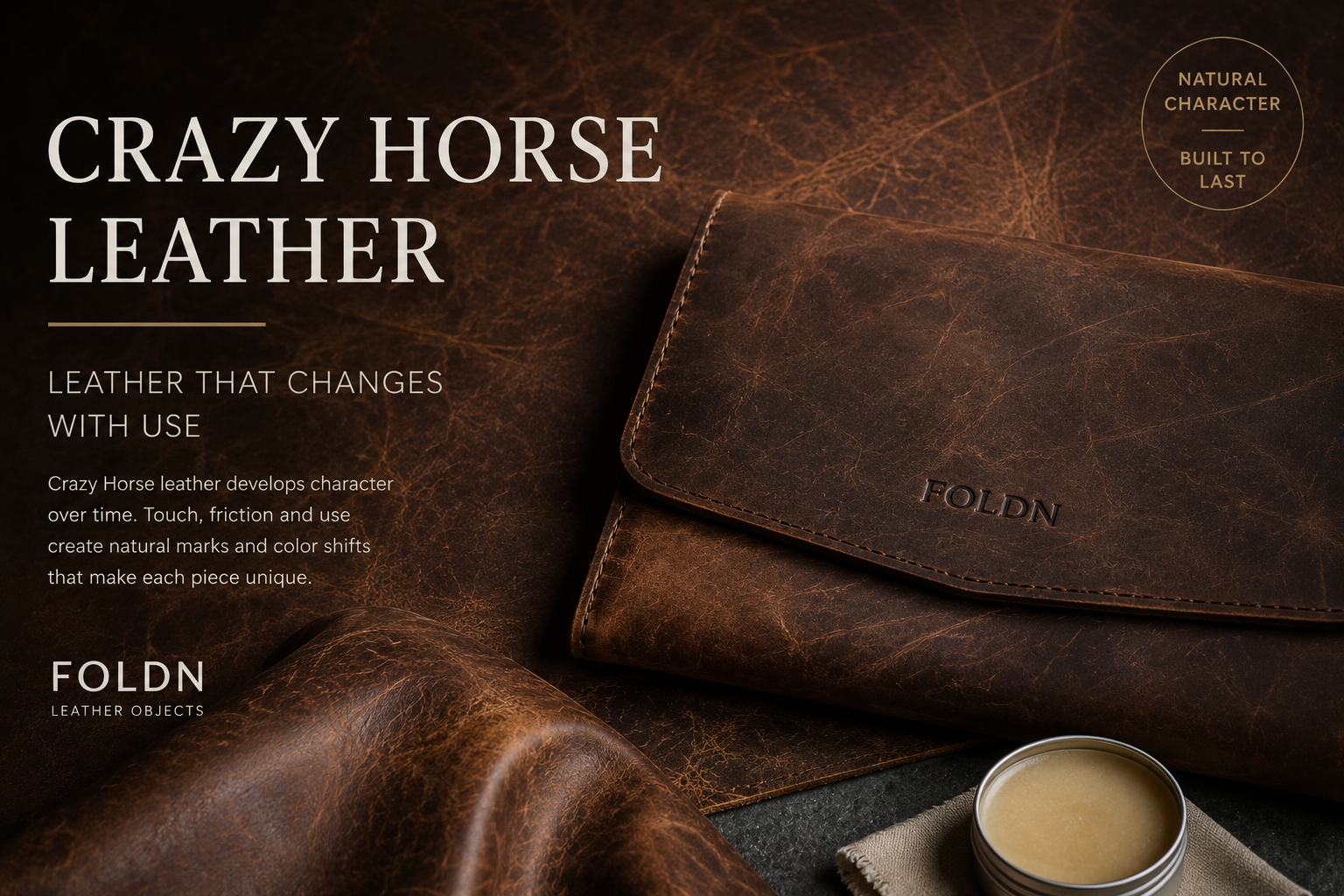
A leather surface becomes darker where the hand touches it. Corners soften. Small scratches remain visible. The object slowly records the life of its owner.
It changes because it is being used.
The value of repetition
There is something satisfying about using the same object every day.
Not because it is fashionable. Not because somebody told us that we need it.
Simply because it works.
A good object disappears into a routine. You don’t have to think about it. Your hand knows where it is. You know how it opens, how it closes, where everything belongs.
That familiarity is a form of design.
The best objects don’t constantly demand attention. They become part of your life.
Handmade means personal
Handmade objects have another quality.
They carry evidence of the person who made them.
A perfectly industrial product can be reproduced thousands of times with almost no visible difference. A handmade object has a different history. The cut, the fold, the stitching and the finishing are decisions made by a human hand.
This doesn’t automatically make something better.
But it makes it different.
And perhaps that difference matters more today than it did before.
Keep fewer things
Minimalism is often presented as an aesthetic: empty rooms, neutral colours, clean surfaces.
But real minimalism is not about having nothing.
It is about knowing what deserves to remain.
A small number of useful objects can be more satisfying than a room full of things that were bought and forgotten.
The objects we keep should have a reason to exist.
They should work.
They should age well.
And ideally, we should still want them years later.
Objects with a life
At FOLDN, we are interested in this relationship between people and objects.
Leather is particularly suited to it because it does not remain unchanged. It develops.
A new leather object is only the beginning.
The real object appears slowly — through use, movement, travel, handling and time.
Perhaps that is why we still value certain things even when newer versions are available.
We don’t only keep an object because it is useful.
Sometimes we keep it because it has become ours.
And that may be the real purpose of a good object: not to impress us when we first see it, but to become more meaningful the longer we live with it.